Enter the access phrase to read the full study — or request it.
Microsoft's campus is full of nap pods, walking trails, courts and quiet rooms. Discover was the product that would let an employee find them — and let RE&S finally see which ones anyone used.
I owned the end-to-end design: the discovery experience inside MyHub, the curation layer above it, and the admin tooling underneath.


The spaces existed. The awareness didn't.
A Studio Wellness Study had already run when I picked this up, so I didn't have to prove the problem. I had to decide which part of it the product was answering.
You can't search for something you don't know exists.
So the entry point can't assume you already know the words. Discover took a playlist approach — spaces grouped by how you want to feel in them, not by what facilities calls them. "Somewhere quiet near Building 34 before a 2pm," not "nap pods."
That framing is what made this a product instead of a list. It also closes a loop RE&S never had: playlists give people a reason to show up, and showing up is what finally produces data worth investing against.
Catalog first, curate second.
Playlists sort spaces by mood, and there was no reliable list of spaces to sort. Half the amenities weren't in any system, and the ones that were had no photos, no hours, no location detail. Building the taste layer on an incomplete catalog would have shipped something that felt smart and answered nothing.
So the catalog went first. Not instead of the vision — underneath it. A searchable directory of what the campus actually has, with the detail an employee needs to go: categories, photos, locations. That's the version that shipped — mobile first, everything else staged behind it.
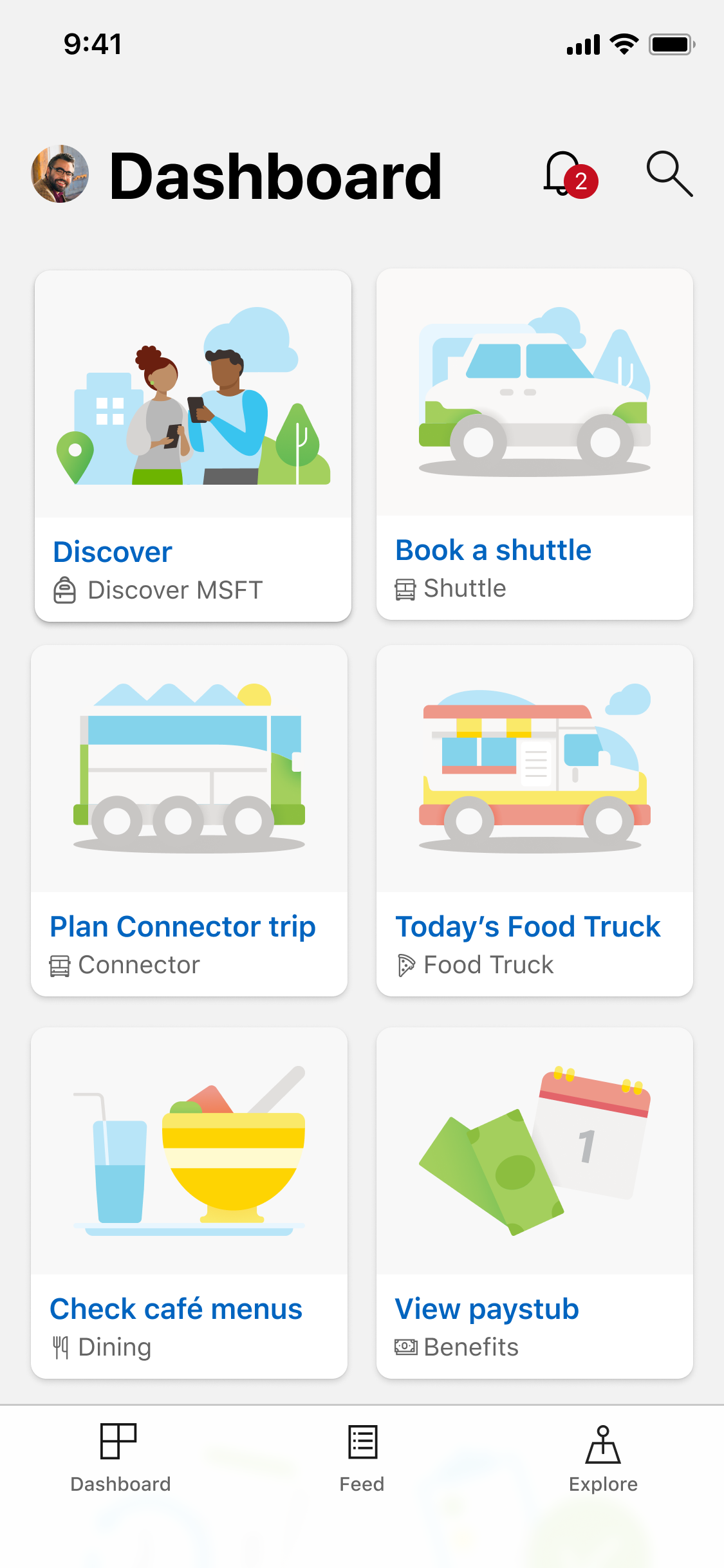
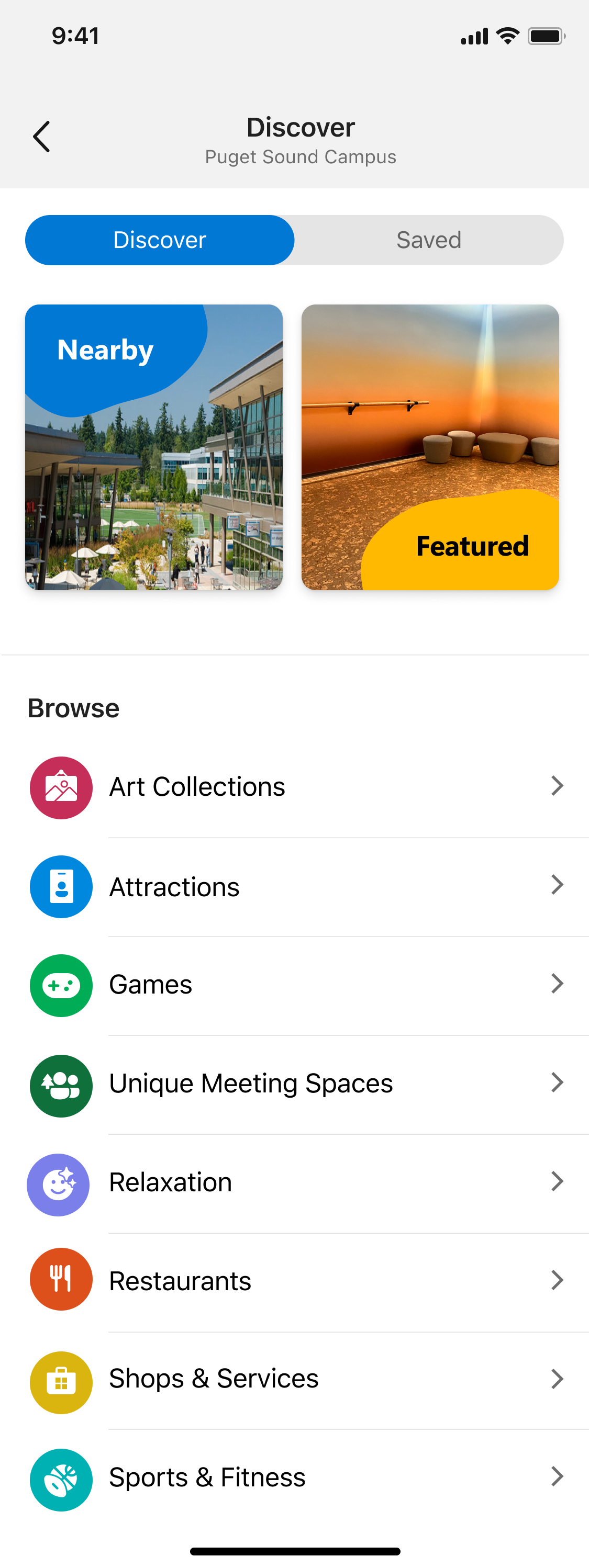
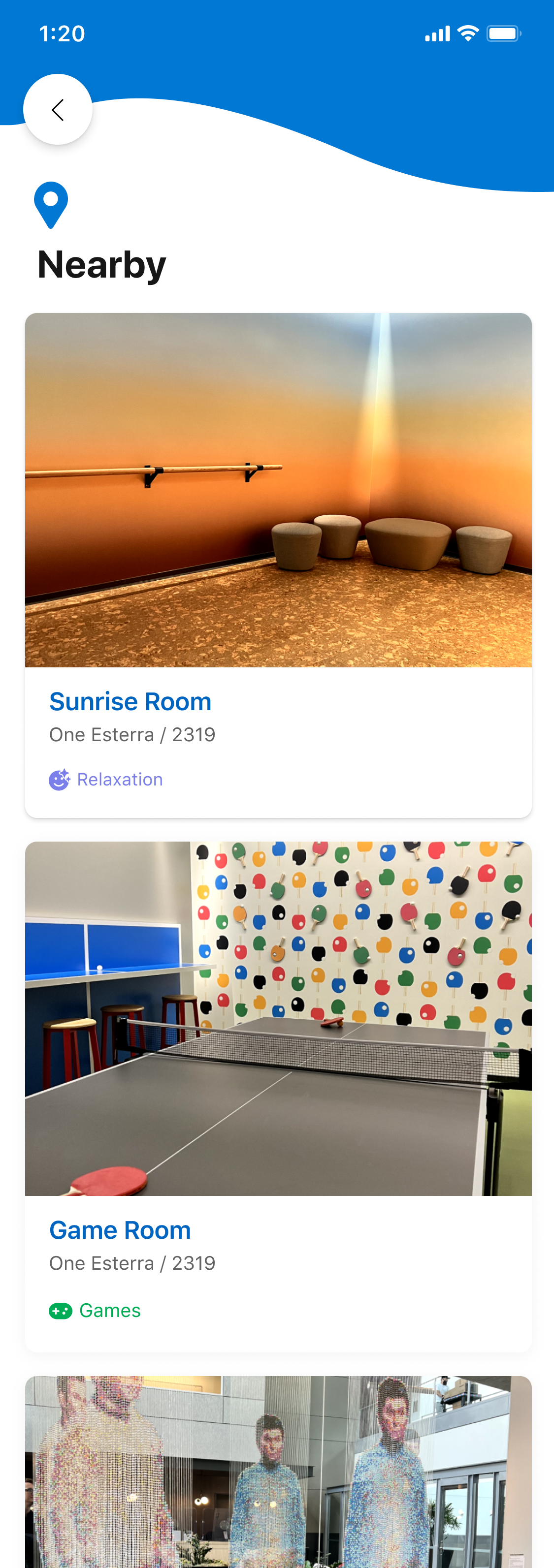
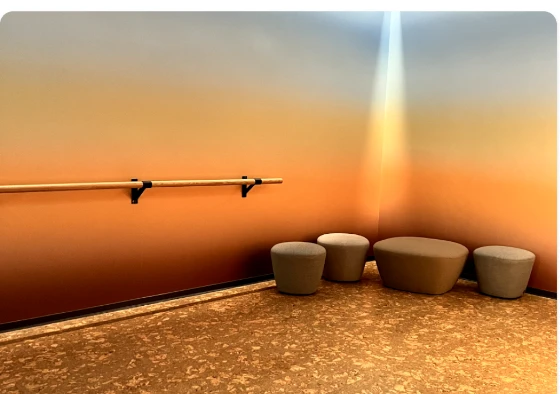
Find it, then go.
A catalog only earns its place if the last screen answers "can I go, and where is it." Tap through it.
Someone has to keep it current.
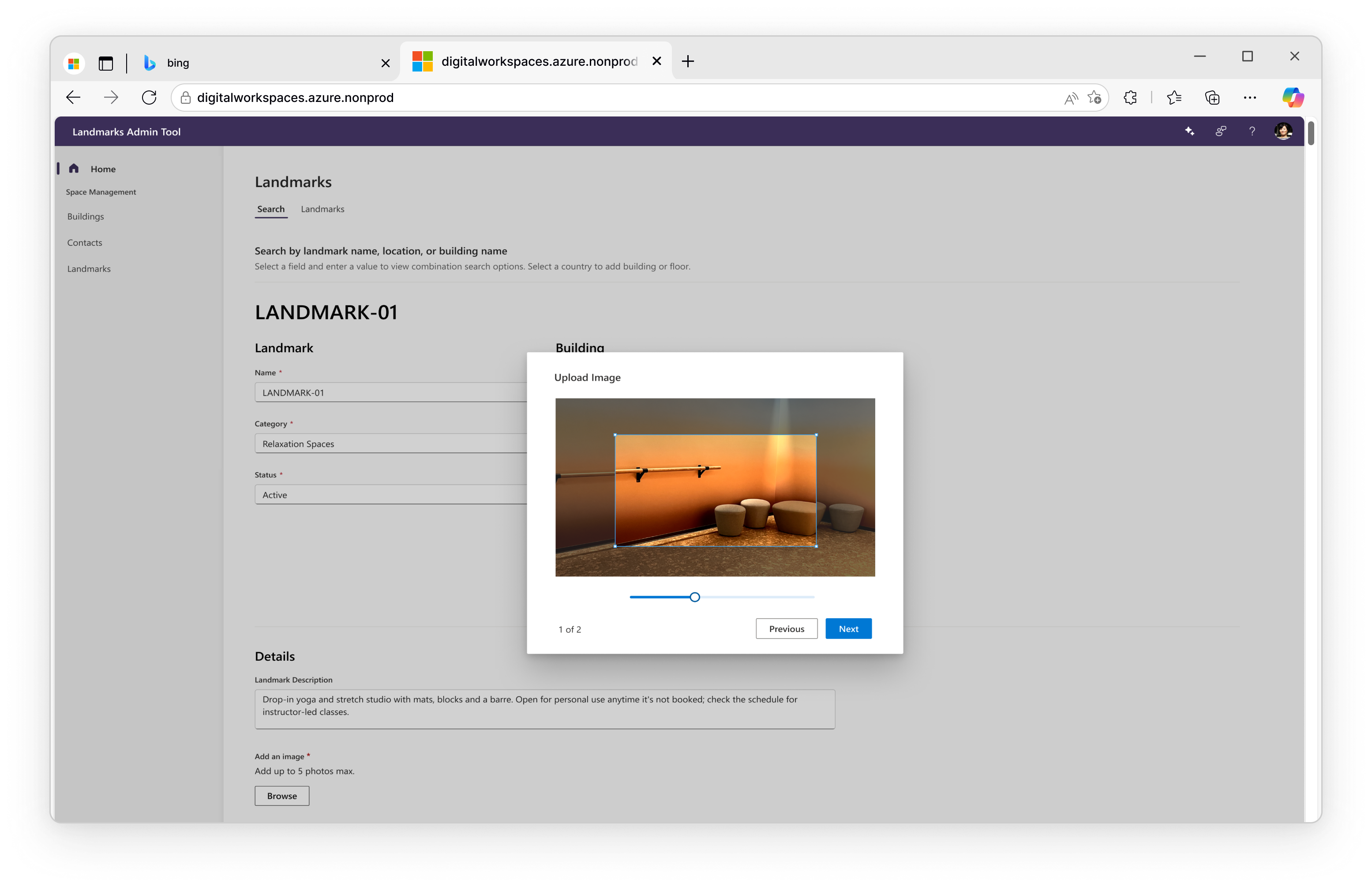
The staging was the risk, and the risk paid out.
The playlists and the utilization view were scoped out of the MVP and never picked back up. The next phase never got funded, and attention moved elsewhere.
So RE&S got an inventory of what it owns, and still has no read on how any of it gets used.
The catalog was the right thing to ship first. It just wasn’t the whole thing.
What held
The directory shipped to mobile and gave RE&S its first real inventory of what it actually owns.
What I'd change
I did propose shipping a check-in with the directory, exactly so the loop would exist on day one. It got cut with everything else in the scope-down, and once it was a separate phase it was never funded. What I'd change is the argument: I let measurement be presented as a feature, when it was the thing that would have paid for the next round.